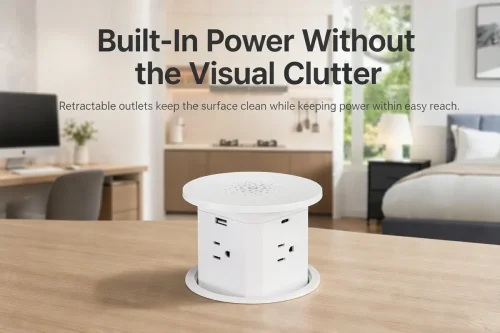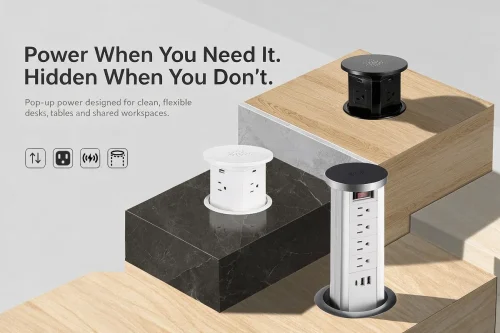
Retractable Power Outlet: Built-In Power Without the Visual Clutter
Modern workspaces need convenient access to electricity, but power products do not always need to remain visible. A retractable power outlet provides power when it is needed and can be recessed or hidden when it is not. Instead of adding another visible power strip to a desk or table, the outlet becomes part of the […]
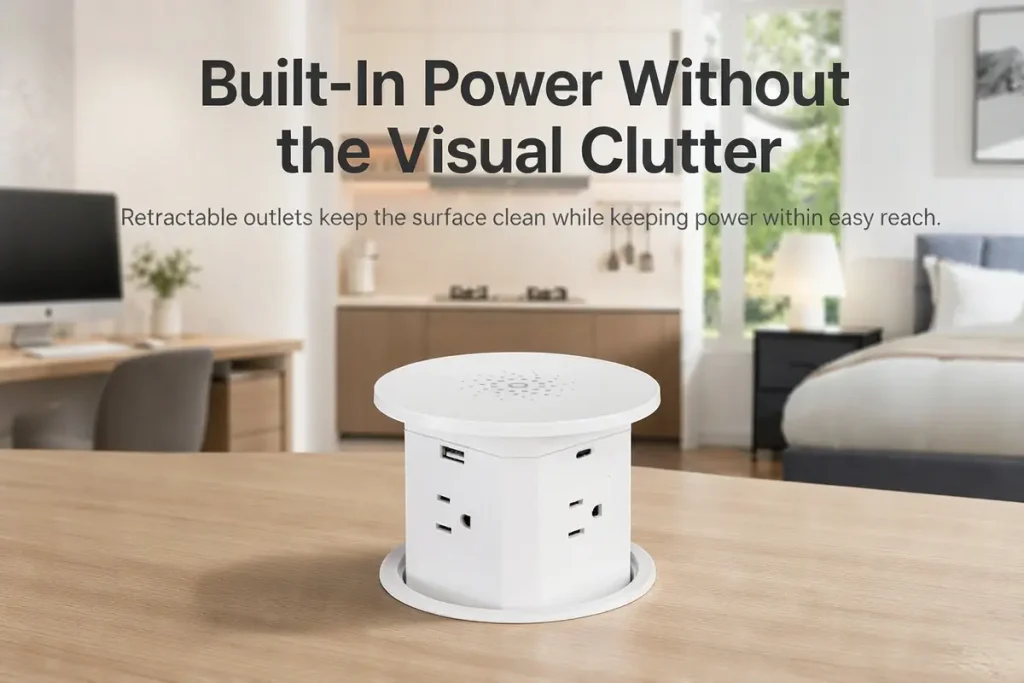
Modern workspaces need convenient access to electricity, but power products do not always need to remain visible.
A retractable power outlet provides power when it is needed and can be recessed or hidden when it is not. Instead of adding another visible power strip to a desk or table, the outlet becomes part of the furniture itself.
For readers looking for a practical example, TOUKOO pop-up socket solutions offer a range of built-in power configurations designed for desks, tables and furniture applications.
The result is simple: power within easy reach, without unnecessary visual clutter.
What Is a Retractable Power Outlet?
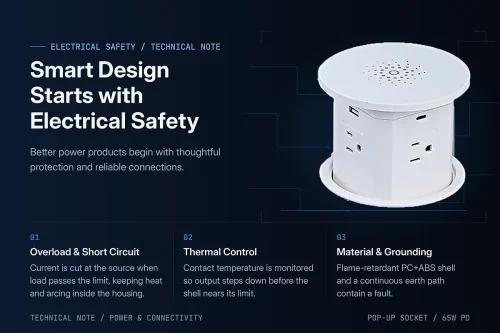
A retractable power outlet is a built-in electrical socket designed to move between an accessible position and a recessed or hidden position.
Depending on the product design, the outlet may lift, pop up or retract into the furniture surface.
When power is required, the socket can be brought into an accessible position. When it is no longer needed, the outlet can return to its recessed position.
This approach makes the power source part of the workspace rather than an additional object placed on top of it.
It is particularly suitable for modern desks, conference tables, workstations and furniture where both usability and appearance matter.
Why Retractable Power Outlets Work Well in Modern Furniture
Modern furniture is becoming more integrated with technology.
Laptops, monitors, smartphones, tablets and other devices all require convenient access to power. At the same time, minimalist workspaces place greater emphasis on clean surfaces and organized cable management.
A retractable power outlet addresses both needs.
Cleaner Work Surfaces
Traditional power strips often remain visible on a desk or floor.
A built-in solution can keep the power source recessed when it is not required. This helps create a cleaner working surface and reduces the visual presence of electrical accessories.
Convenient Access to Power
Power should be close to the user.
Instead of reaching behind furniture or searching under a desk, users can access the outlet directly from the work surface.
This is particularly useful in meeting rooms, shared workstations and office desks where several devices may need power at the same time.
Better Use of Furniture Space
A built-in outlet can make use of space that would otherwise remain unused.
The power solution becomes part of the desk, table or countertop rather than occupying additional surface space.
A More Integrated Appearance
The purpose of a hidden outlet is not simply to hide electricity.
It is to integrate technology into the environment.
This makes retractable and pop-up designs a natural fit for contemporary office furniture, commercial interiors and modern residential spaces.
From Desktop Power to Furniture Integration
The concept of hidden power is closely connected to the growing use of pop-up sockets for desks and tables.
In our previous Products article, Pop Up Socket for Desk, we explored how pop-up designs can bring AC power and charging closer to users while keeping the work surface more organized.
This new article takes the idea one step further.
Rather than looking only at a desk socket, we can consider the wider role of integrated power in modern furniture.
A power outlet can be designed around the furniture instead of forcing the furniture to accommodate a separate power strip.
That difference matters for office designers, furniture manufacturers and B2B buyers developing products for modern workspaces.
AC Power, USB Charging and Modern Device Needs
Today's workspace often requires more than a traditional AC outlet.
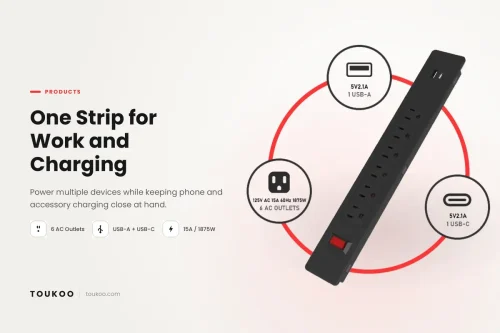
Depending on the product configuration, a built-in power solution may combine AC outlets with USB-A, USB-C or wireless charging functions.
This gives users greater flexibility when connecting laptops, phones, tablets and other electronic devices.
However, the right configuration depends on the intended application.
A conference table may require several AC outlets for multiple users. An individual workstation may place greater emphasis on USB-C charging. A premium furniture project may also require wireless charging or customized surface integration.
TOUKOO's current pop-up socket range includes different configurations with AC outlets and charging functions, while specifications vary by model.
For this reason, B2B buyers should evaluate the actual product configuration instead of assuming that every retractable or pop-up outlet provides the same functions.
Where Can a Retractable Power Outlet Be Used?
A retractable power outlet can be applied in many furniture-based environments.
Office Desks
Office desks often need power for computers, monitors, phones and other everyday devices.
A built-in outlet keeps those connections close to the user without placing another power strip on the desktop.
Conference Tables
Meeting rooms often have multiple users connecting laptops and chargers.
Integrating power into the table can reduce long cables running across the room and make power access more convenient.
Shared Workstations
Flexible offices and shared workspaces may need power that can be accessed from different positions.
A centrally positioned outlet can provide a practical solution for multiple users.
Executive and Home Office Desks
For premium desks, visual appearance can be just as important as functionality.
A hidden power solution can remain discreet when it is not being used.
Commercial and Hospitality Furniture
Hotels, coworking spaces, retail environments and other commercial interiors can also benefit from furniture-integrated power.
The same principle applies: power should be accessible when needed without dominating the surrounding design.
For additional desktop power configurations, see TOUKOO's desktop power socket range.
What to Consider Before Choosing a Retractable Power Outlet
Choosing the right product involves more than looking at the number of outlets.
1. Installation Space
Check the required cutout dimensions, furniture thickness and available space below the surface.
A retractable mechanism needs sufficient room to operate correctly.
2. Outlet Configuration
Consider the electrical standard required for the target market.
The number and type of outlets should also match the expected number of users and connected devices.
3. Electrical Rating
The voltage, current and maximum load should always match the intended application.
For B2B projects, these specifications should be confirmed for the specific model rather than assumed from a product category.
4. Charging Requirements
If the product will be used for modern devices, consider whether USB-A, USB-C or other charging functions are required.
Higher-power charging may also affect the product's internal electrical design.
5. Cable Management
A good built-in power solution should not simply move the visible power strip underneath the desk.
The cable routing and installation method should also be considered as part of the overall furniture design.
6. Safety and Compliance
Electrical safety should be considered from the beginning of product development.
For furniture-integrated power products, buyers should evaluate the electrical rating, installation method, target market and applicable certification requirements for the specific model.
For reference, UL Solutions' guidance on power strips and furniture power distribution covers categories including furniture power distribution units, multioutlet assemblies and relocatable power taps.
How Internal Design Supports Reliable Power
A clean exterior is only one part of a well-designed electrical product.
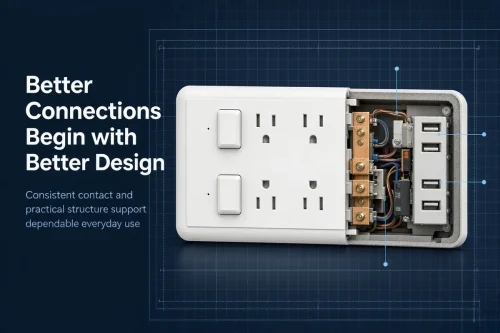
Inside the housing, conductors, socket contacts, switches, insulation, protection components and thermal design all influence electrical performance.
This connects directly with our recent Technology article, power strip internal design, which explains how current paths, conductor architecture, contact pressure, overload protection, thermal management and insulation contribute to safer power products.
The same principle applies to furniture-integrated power.
The product may look simple from the outside, but its internal structure needs to support the intended electrical load and functions within a compact space.
Good product design therefore considers both sides:
What the user sees — and what the user never sees.
A Flexible Power Solution for OEM and ODM Projects
Not every furniture project requires the same power configuration.
A furniture brand may need a specific outlet arrangement. A distributor may require a particular market standard. Another customer may need different USB charging functions, dimensions, colors or packaging.
For these projects, customization can become an important part of product development.
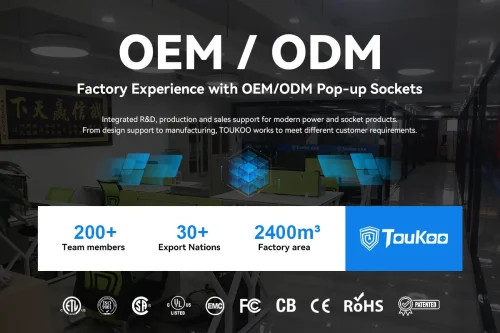
TOUKOO provides OEM/ODM support covering product development, customization, branding, packaging and manufacturing according to project requirements.
For businesses interested in this area, our previous Company article on TOUKOO OEM/ODM power solutions provides more information about the relationship between product development, mold development, manufacturing and customized power products.
This creates a natural connection between product selection and manufacturing capability.
A buyer may begin by looking for a retractable outlet.
The next question may be whether that product can be adapted to a specific furniture project.
A Cleaner Way to Bring Power Into Modern Spaces
Power should be easy to access, but it does not always need to be visually dominant.
A retractable power outlet offers a practical way to bring electricity and charging closer to users while keeping desks, tables and furniture cleaner when the outlet is not in use.
For offices, conference rooms, shared workspaces, commercial furniture and modern interiors, built-in power can create a better balance between accessibility, functionality and visual simplicity.
The idea is straightforward:
Power when you need it.
Hidden when you don't.
To explore available solutions, visit the TOUKOO pop-up socket collection or Contact TOUKOO to discuss product requirements and OEM/ODM opportunities.
FAQ
What is a retractable power outlet?
A retractable power outlet is a built-in electrical outlet that can move into an accessible position when needed and return to a recessed or hidden position when not in use.
What is the difference between a retractable outlet and a traditional power strip?
A traditional power strip usually remains visible and sits on or near the work surface. A retractable outlet is designed to integrate into furniture and can be hidden or recessed when it is not needed.
Where can retractable power outlets be used?
They can be used in office desks, conference tables, shared workstations, executive desks, kitchen counters, commercial furniture and other applications where integrated power is useful.
Can a retractable power outlet include USB-C charging?
Yes, depending on the product configuration. USB-A, USB-C and wireless charging can be integrated into selected models, but exact specifications vary by product.
Can retractable power outlets be customized?
Depending on the project, customization may include outlet configuration, charging functions, dimensions, housing design, branding, packaging and other requirements.