Electrical Contact Design: The Foundation of Reliable Power Connections
Reliable electrical connections depend on thoughtful contact design and a well-planned internal structure.
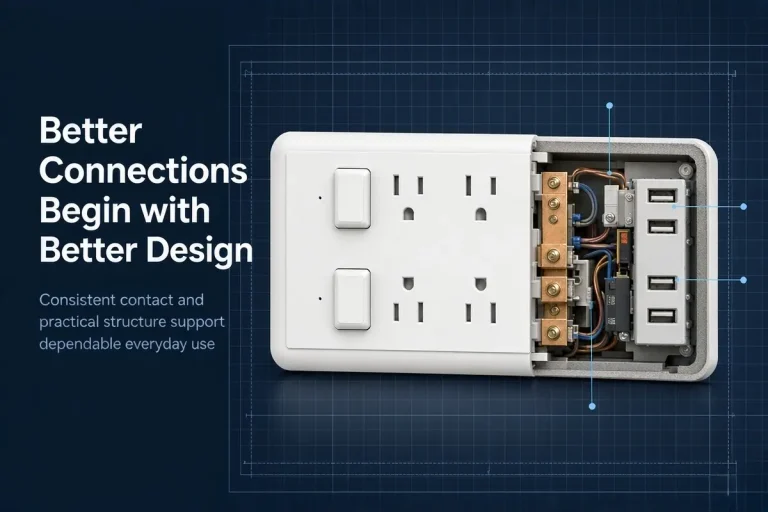
A power outlet may look simple from the outside, but its performance depends on what happens inside. Electrical contact design plays an important role in how electrical components connect, carry current and support everyday use.
From conductive contacts and internal wiring to insulation and component assembly, each part contributes to the overall design of a power product. A well-planned internal structure helps manufacturers address electrical performance, mechanical stability and product consistency.
For power strips, desktop sockets and other power distribution products, reliable connections begin with thoughtful engineering—not appearance alone.
What Is Electrical Contact Design?
Electrical contact design refers to the way conductive components are shaped, positioned, connected and supported to establish an electrical path.
In a power outlet or power strip, this may involve socket contacts, conductive bars, terminals, wires and connections between different components. The exact structure varies according to the product type, electrical rating and intended application.
A suitable design needs to consider both electrical and mechanical requirements. Components must be positioned correctly, connections must be assembled consistently, and the surrounding structure must support the intended conditions of use.
These considerations are especially important in compact products, where several electrical functions may need to fit within a limited housing.
Why Reliable Electrical Connections Matter
Electrical connections are not simply points where metal components touch. Their design and assembly can influence the performance of the complete product.
1. Contact Quality and Connection Stability
Conductive contacts need suitable geometry, material properties and mechanical support for the intended application.
If a connection is poorly designed or assembled outside its specifications, its electrical performance may be affected. For this reason, contact structure and assembly consistency are important considerations during product development.
2. Conductive Components and Current Paths
The internal current path connects the power input to the outlets and other electrical functions.
Conductive bars, wires, terminals and connection points should be selected and arranged according to the product's electrical requirements. Their dimensions, materials and connection methods need to be evaluated as part of the overall design.
A clear, well-planned current path also makes the internal structure easier to review during engineering and quality inspections.
3. Mechanical Support and Assembly
Electrical components must remain properly positioned within the housing.
The design of mounting points, insulating supports and internal fixtures can influence how components are held in place during normal use. Assembly procedures also matter because a well-designed structure still depends on consistent manufacturing.
Inside a Power Strip: More Than Conductive Metal
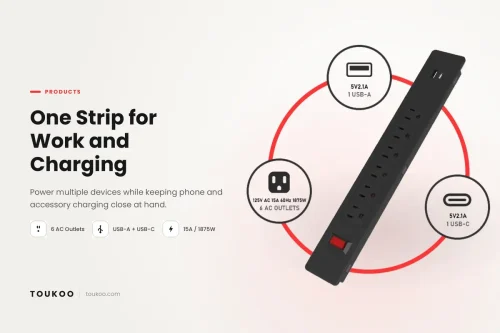
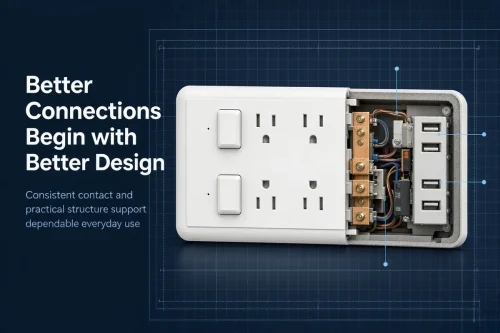
A power strip contains several parts that work together. Depending on the design, these may include socket contacts, conductive bars, switches, wiring, insulating materials, USB charging modules and protective components.
Each part has a different function, but the parts cannot be considered in isolation.
For example, conductive components must be arranged within a suitable housing. Insulation needs to separate electrical paths as required by the design. Switches and charging modules must also be integrated in a way that matches the product's intended electrical configuration.
This is why power strip internal design deserves attention during product development. Understanding the relationship between internal components provides a more complete view of how a power product is engineered.
The Role of Insulation and Thermal Management
Good electrical design involves more than establishing a conductive path. It must also consider where current should flow and how different electrical parts are separated.
Insulating materials help separate conductive components and support the intended electrical arrangement. Their selection depends on the product design, operating conditions and applicable requirements.
Thermal performance is another important consideration. Electrical components can generate heat during operation, and the overall design should account for the intended load and relevant testing requirements.
Housing design, component spacing, conductor selection and assembly methods can all form part of this assessment. Actual performance should be confirmed through appropriate engineering evaluation and product testing rather than appearance alone.
How Manufacturing Quality Supports Consistent Connections
Product reliability depends on both design and execution.
Even when a product has been carefully engineered, variations in component dimensions, material quality or assembly processes can affect the finished product. Manufacturing controls therefore play an important role in maintaining consistency between units.
Depending on the product and production process, quality checks may include:
- Incoming inspection of components and materials
- Verification of assembly procedures
- Checks on wiring and terminal connections
- Inspection of finished products
- Electrical and mechanical testing according to applicable requirements
The appropriate inspection and testing plan depends on the product category, intended market and relevant standards. No single checklist replaces a product-specific quality plan.
For buyers comparing suppliers, it is useful to understand not only how a product looks, but also how its components are selected, assembled and evaluated.
Electrical Safety: Design, Testing and Compliance
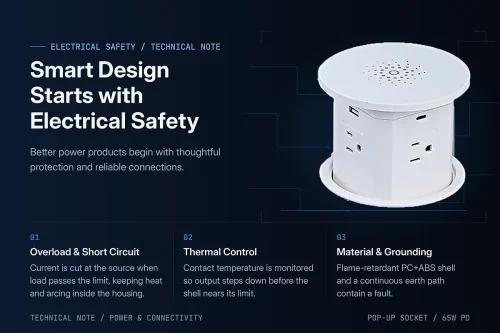
Electrical safety should be considered throughout product development—not added as a final step.
The applicable requirements depend on the product category, electrical rating, installation method and target market. A desktop power socket, a furniture power distribution unit and a relocatable power tap may fall under different evaluation requirements.
For background information, UL Solutions' power strips testing and certification guidance explains how testing and certification can apply to furniture power distribution units, multioutlet assemblies and relocatable power taps.
Manufacturers and buyers should identify the relevant requirements for the exact product and intended market. Certification or compliance claims should only be made when supported by the appropriate documentation for that model.
From Internal Engineering to Better Product Design
Internal electrical design and the user experience are closely connected.
A well-integrated product needs to fit its intended application, provide the required outlet configuration and support practical installation. For desktop sockets and pop-up outlets, this may also involve housing dimensions, mounting arrangements, cable routing and access to charging ports.
Explore TOUKOO pop-up socket solutions to see how integrated power products serve desk and furniture applications. The specific configuration and functions should always be checked against the individual product specifications.
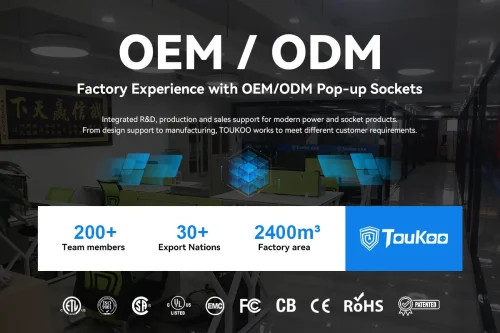
For businesses developing their own product ranges, TOUKOO OEM and ODM capabilities provide a starting point for discussing product requirements, customization and manufacturing needs.
Building Reliable Power Products Starts from Within
The external appearance of a power product is only one part of its design. Electrical contacts, current paths, insulation, mechanical support and manufacturing controls all contribute to how the product is developed and evaluated.
By considering these elements together, manufacturers can make more informed design decisions and establish a clearer basis for product validation.
At TOUKOO, product development and manufacturing requirements are important parts of delivering power solutions for different applications. To discuss a product or project requirement, contact the TOUKOO team.
Reliable power begins with thoughtful design, consistent manufacturing and appropriate testing.