OEM/ODM Pop-Up Socket Manufacturer: From Project Brief to Production
Choosing an OEM/ODM pop-up socket manufacturer involves more than comparing prices or adding a logo to an existing product. For distributors, furniture brands, electrical-product businesses and private-label companies, a successful project requires clear communication, suitable product design, reliable manufacturing coordination and quality planning. Pop-up sockets are designed to integrate power access into desks, tables and […]
Choosing an OEM/ODM pop-up socket manufacturer involves more than comparing prices or adding a logo to an existing product. For distributors, furniture brands, electrical-product businesses and private-label companies, a successful project requires clear communication, suitable product design, reliable manufacturing coordination and quality planning.
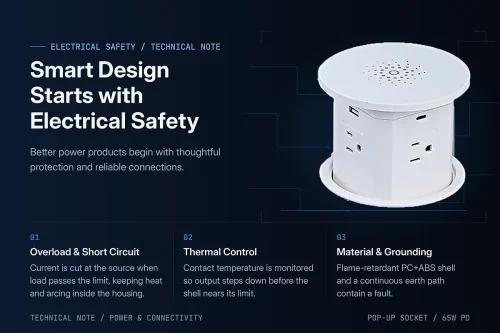
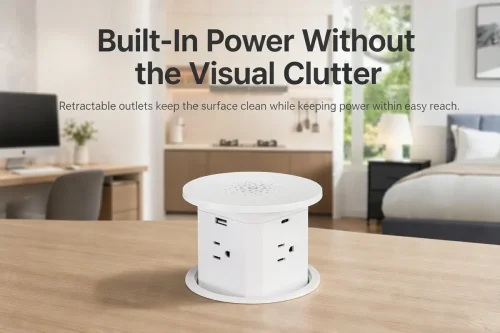
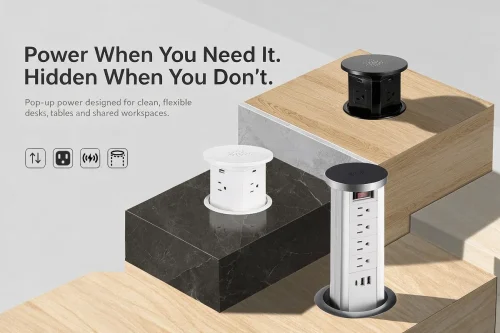
Pop-up sockets are designed to integrate power access into desks, tables and other suitable furniture. Depending on the model, they may combine AC outlets with USB-A, USB-C or other charging functions. This variety creates opportunities for customization, but it also means that product requirements need to be defined carefully.
At TOUKOO, our approach brings together product development, manufacturing and customer support to address different project requirements. For a broader introduction to our company and services, explore TOUKOO's company profile.
What Do Buyers Need from an OEM/ODM Pop-Up Socket Manufacturer?
B2B buyers often need more than a standard product catalog. They may have a specific application, target market, furniture design or brand requirement that an off-the-shelf model cannot fully address.
A manufacturing partner should be able to discuss the project before recommending a configuration.
Important questions include:
- Where will the socket be installed?
- Which country's electrical standard does the product need to meet?
- How much space is available beneath the desk or tabletop?
- Which AC outlets and charging interfaces are required?
- Are customized dimensions, colors, branding or packaging needed?
- What documentation and product-level compliance requirements apply to the target market?
Answering these questions early helps buyers and manufacturers establish a clearer project scope.
From Product Requirements to a Suitable Configuration
The first step is to understand how the product will be used.
A pop-up socket for a conference table may need a different outlet arrangement from one designed for a home office or a commercial furniture project. The number of users, connected devices and available installation space can all influence the final configuration.
Depending on the project and available model options, customization discussions may cover:
- AC outlet type and quantity
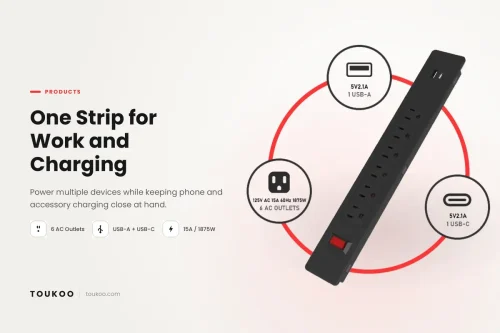
- USB-A and USB-C charging options
- Charging power and other electronic functions
- Housing dimensions and surface finish
- Power cord specifications
- Product branding and packaging
Not every function is available on every model. For this reason, the requested features should be checked against the product's electrical design, available configurations and intended market.
You can explore TOUKOO's pop-up socket product range to review existing options before discussing project-specific requirements.
How an OEM/ODM Pop-Up Socket Project Works
A well-organized project moves through several stages. The exact process depends on the amount of customization, technical requirements and production scope.
1. Define the Application and Target Market
The project begins with the intended use and sales market.
For example, a socket designed for a North American desk application may require a different outlet configuration from one intended for another region. Buyers should also provide relevant installation information, including tabletop thickness, cutout dimensions and the space available below the surface.
Clear requirements reduce uncertainty during later design and product selection.
2. Review the Design and Product Configuration
After the requirements are understood, the next step is to review a suitable existing model or discuss possible design changes.
This may involve outlet layout, charging interfaces, housing dimensions, cable routing and the way the product integrates with the furniture.
For projects involving custom components or structural changes, design and tooling requirements should be evaluated before confirming the final scope.
3. Coordinate Customization and Branding
Customization may involve more than the physical product.
Depending on the project, buyers may need a custom logo, product finish, color, user documentation or retail packaging. These details should be agreed upon early so that the product and its supporting materials remain consistent with the intended market.
The available options, minimum order requirements and development steps should be confirmed with the supplier for each project.
4. Plan Manufacturing and Quality Checks
Manufacturing involves coordinating components, assembly requirements and the checks needed for the finished product.
A project-specific quality plan may address incoming components, assembly consistency, electrical and mechanical evaluation, visual inspection and final-product checks, as appropriate to the product and applicable requirements.
The goal is to establish clear expectations before production rather than relying on appearance alone.
5. Confirm Documentation and Delivery Requirements
Before production is finalized, both parties should confirm the product specifications, approved configuration, packaging details, required documentation and delivery arrangements.
This is particularly important for international projects, where electrical requirements, labeling and compliance documentation may vary by destination market.
A clear approval process helps reduce misunderstandings between product development, purchasing and manufacturing teams.
Why Product Experience Matters for Pop-Up Sockets
A pop-up socket must work as an electrical product and fit into a furniture installation.
Its design may need to account for the tabletop cutout, available space beneath the surface, cable routing, outlet arrangement and the operation of the lifting or retractable mechanism.
When charging electronics are included, the configuration may also need to accommodate the relevant charging modules and their electrical requirements.
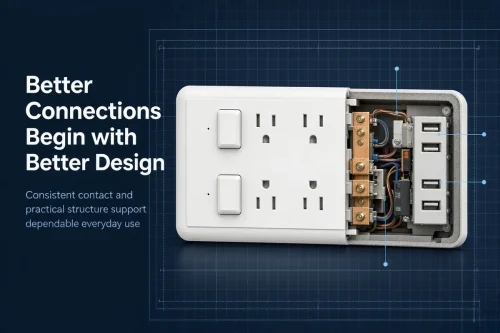
These considerations connect product development with engineering. Our article on power strip internal design explores how conductors, electrical contacts, insulation, thermal considerations and manufacturing consistency contribute to the design of power products.
For buyers, the key lesson is simple: a product should be evaluated as a complete system, not just by its appearance or list of features.
Quality Planning and Market Requirements
Quality should be considered throughout a project, from the initial requirements to manufacturing and product evaluation.
The appropriate checks depend on the product type, electrical rating, construction and intended market. Buyers should confirm which tests, documents and certifications apply to the specific model rather than assuming that every product in a category has identical approvals.
For background reading, ISO's introduction to quality management systems explains how structured processes and continual improvement support consistent products and services.
For OEM/ODM projects, it is useful to agree on quality expectations, product specifications and approval requirements before mass production begins.
Working with TOUKOO on OEM/ODM Projects
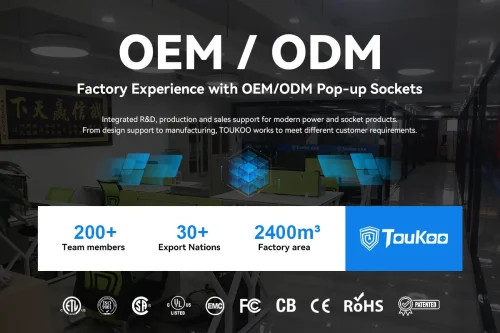
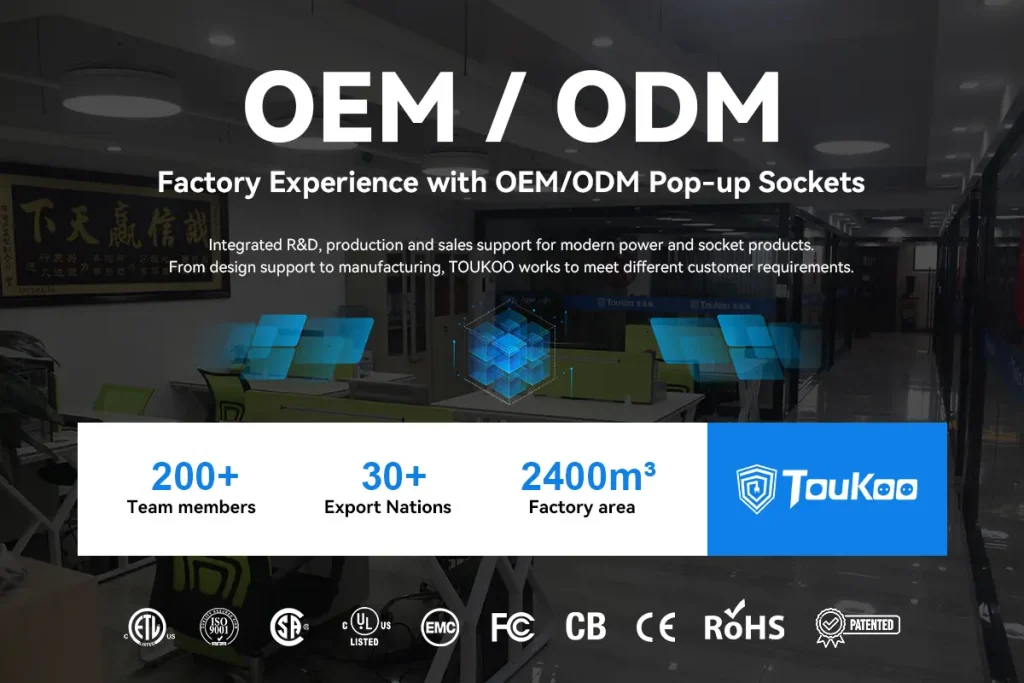
TOUKOO supports power-product development and customization for different customer requirements. Our company profile highlights an integrated approach to R&D, production and sales, as well as OEM/ODM services.
For buyers who are still comparing suppliers, our related article Power Strip Manufacturer: How TOUKOO Supports Global OEM/ODM Projects (Internal Link 4) provides a broader overview of manufacturing collaboration, customization and project support.
If you are already exploring product options, our pop-up socket for desk guide explains common applications and considerations when selecting a socket for a workspace.
Together, these resources help buyers move from understanding the product to evaluating its application and discussing manufacturing requirements.
Start Your Next Pop-Up Socket Project
A successful OEM/ODM project begins with a clear understanding of the application, target market and product requirements.
Whether you are sourcing an existing pop-up socket or exploring a customized solution for a furniture brand, distributor program or commercial project, early communication can help clarify the available options and the next steps.
Share your intended application, target market, preferred functions and customization needs with the TOUKOO team. We can then discuss the requirements and identify the appropriate direction for your project.
To get started, contact TOUKOO about your OEM/ODM requirements.
From product planning to manufacturing coordination, the right process helps turn a product idea into a clearly defined project.
Frequently Asked Questions
What can be customized in an OEM/ODM pop-up socket project?
Depending on the model and project scope, customization may include outlet configuration, charging interfaces, dimensions, housing finish, branding and packaging. The available options should be confirmed for the specific product.
Can a pop-up socket include USB-A and USB-C charging?
Selected models may include USB-A, USB-C or other charging functions. Availability and output specifications vary by model, so buyers should confirm the product data before placing an order.
What information should I prepare before requesting an OEM/ODM quote?
Prepare the target market, intended application, required outlet standard, desired functions, installation dimensions, estimated quantity and any branding or packaging requirements. Product documentation and compliance expectations should also be identified early.
Do all pop-up socket models have the same certifications?
No. Applicable requirements and certifications depend on the product model, design, electrical rating and destination market. Buyers should verify the documentation for the specific product they intend to purchase.